GameStop PSA Grading: An Honest Review
GameStop taking grading submissions at the mall counter is one of the stranger sentences the hobby has produced, and also one of the more useful ones. The partnership puts real PSA grading behind a retail counter: no boxes, no insurance forms, no Card Saver shopping. It’s genuinely convenient, genuinely limited, and worth an honest review of which cards it fits.
Key Takeaways
- It is real PSA grading: same graders, same standards, same slabs, GameStop logistics.
- Flat per-card pricing near bulk rates, with no membership or minimums.
- Value caps and handling limits make it wrong for expensive cards.
- Best use: batches of modest modern cards where mailing overhead eats the math.
Table of Contents
How It Works
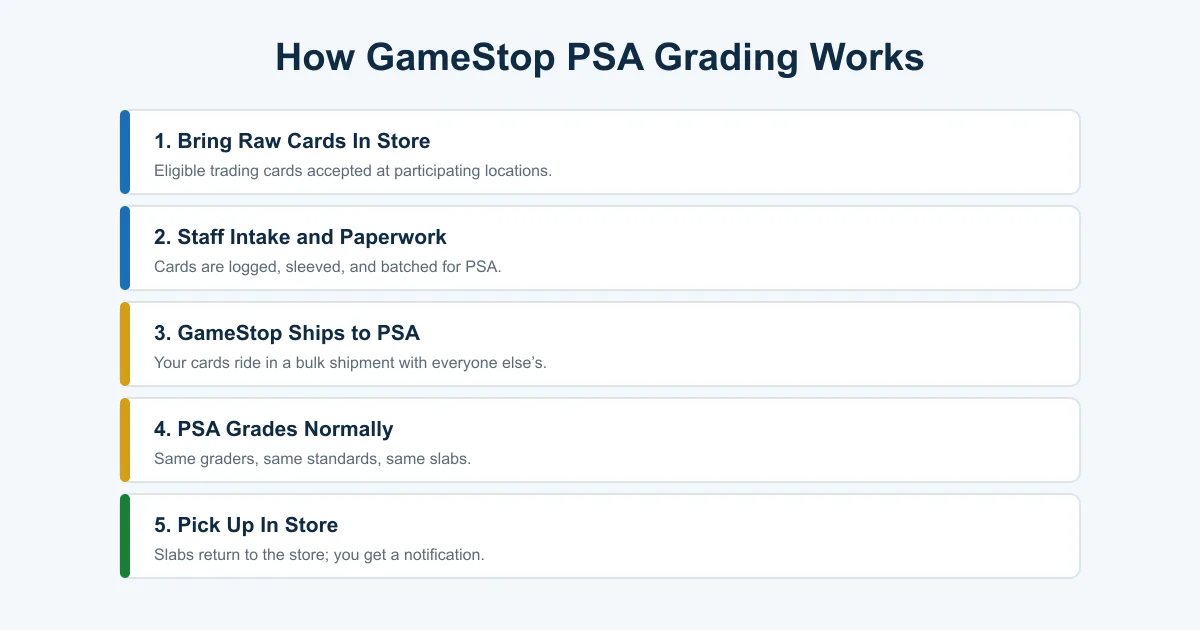
The flow from the customer side:
- Bring eligible raw cards to a participating store. Eligibility covers mainstream trading cards under a value cap; the counter checks each card.
- Staff intake: cards logged, sleeved, and receipted. You leave with paperwork instead of cardboard, which takes a leap of faith the first time.
- GameStop batches to PSA. Your cards ride a bulk shipment with everyone else’s.
- PSA grades normally: same standards, same 1-10 scale, same slabs and cert numbers as any submission.
- Pickup in store when the slabs return, with a notification when they land.
The pitch is removing every logistical step that makes direct submission feel like a project: no account, no forms, no packing standards, no insured shipping, no waiting for supplies. For a collector with eight decent rookies and no Card Savers in the house, that’s a real pitch.
What It Costs
Flat per-card pricing, typically positioned near PSA’s cheapest bulk tier without the membership or 20-card minimum that bulk normally demands. That’s the headline value: direct bulk pricing requires a paid membership and volume; GameStop hands similar per-card economics to someone with five cards.
Set against the true cost of a direct submission, the comparison for small batches often favors the counter once two-way insured shipping is priced in. Rates, eligibility, and caps change, so treat the current in-store quote as the number, and remember the universal rule: whatever the fee, each card still has to pass the is-it-worth-grading math.
GameStop vs Direct Submission
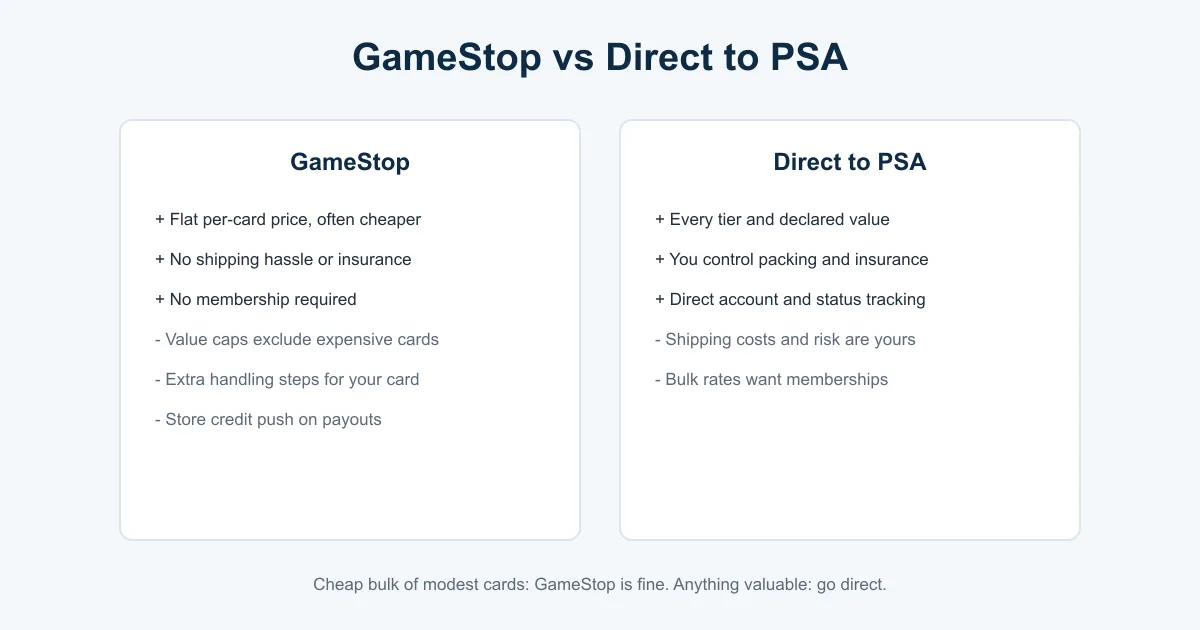
GameStop wins on: friction (none), small batches (no minimums or memberships), shipping (not your problem), and predictability (flat rate, no declared-value gymnastics).
Direct wins on: value caps (every tier exists, up to grails), control (your packing, your insurance, your order tracking), speed options (paid tiers exist; the counter is bulk-speed only), and chain of custody (your box goes to PSA, not through a retail back room first).
That last one deserves honesty rather than fear: extra handling steps are extra handling steps. For a $40 card it’s not worth a thought; for a card you’d grieve, it’s the whole answer. My line: nothing irreplaceable goes through any process with more hands than necessary, whatever the receipt says.
Which Route Fits Your Cards?
Counter or Mailbox?
Answer three questions for the sensible route.
The Fine Print That Matters
Practical notes from reading the program terms the way collectors should:
- Eligibility is per card, decided at the counter. Value caps, card types, and condition standards apply, and staff discretion is real. Bring alternatives for a batch’s borderline cards.
- Turnaround is bulk-speed. The counter route rides the slowest queue plus retail logistics on both ends. If a market window matters, pay for speed directly.
- Sell-to-GameStop offers are a separate decision. Stores may offer to buy your returned slabs, often weighted toward store credit. Check the sold-listing price before accepting any counter offer; the convenience discount on selling is much larger than the one on grading.
- The slab is the same slab. Whatever route it took, a PSA 10 is a PSA 10, verifiable like any other cert and priced identically by the market. The route changes your costs and risks, never the product.
One more scenario worth naming: the collector who has never graded anything and wants to learn the ropes cheaply. The counter route is a genuinely good classroom. You experience the wait, the grade reveal, and the slab-in-hand payoff without buying supplies or learning packing standards, and the lessons transfer directly to direct submissions later. Compare the counter quote against PSA’s current published rates so you know what the convenience is costing, and check what your candidate cards’ graded versions actually sell for on eBay before committing any of them.
Verdict: a genuinely good on-ramp for exactly the cards it was designed for (modest modern stuff in small batches), and the wrong tool the moment value or sentiment climbs. Use it like that and it’s a fine addition to the hobby; use it as a universal answer and the fine print will eventually explain itself at your expense. Program details live at GameStop’s grading page and change, so confirm before the trip.
Program terms, pricing, and eligibility are GameStop’s and PSA’s and change without notice. Confirm current details in store. Not financial advice.
Frequently Asked Questions
Does GameStop do PSA grading?
Yes. Participating GameStop stores accept eligible raw trading cards in store, batch them to PSA for grading, and return the slabbed cards to the store for pickup. It is real PSA grading with GameStop handling the logistics.
How much does GameStop PSA grading cost?
A flat per-card rate, typically positioned near PSA's cheapest bulk pricing without requiring a membership or minimum card count. Check current in-store pricing, as rates and eligibility rules change.
Is GameStop grading legitimate?
The grading itself is done by PSA with the same standards and slabs as direct submissions. The trade-offs are value caps on eligible cards, extra handling steps, and slower total turnaround than paid-tier direct submissions.
Should I grade expensive cards through GameStop?
No. Value caps typically exclude them anyway, and expensive cards deserve the insurance, declared values, and direct tracking of a proper PSA submission. GameStop shines for modest modern cards, not grails.