Hockey Card Grading: The Complete PSA, BGS and SGC Guide
Grading is the machine that turned card collecting into a market. A raw card is an argument about condition; a slabbed card is a number everyone prices instantly. After a decade of submissions (some triumphant, some expensive lessons in humility), here’s the complete guide to how grading works, what it costs, and when it’s actually worth doing for hockey cards.
Key Takeaways
- Grading converts condition into a market-priced number and authenticates the card for life.
- PSA rules resale value, BGS owns subgrade prestige, SGC wins on speed and vintage value.
- Expect roughly $20-25 per card at value tiers, plus shipping, plus patience.
- Grade when the math works or the card is a keeper grail. Never grade on hype.
- The 9-to-10 price jump is where grading profits live, and it is never guaranteed.
Table of Contents
What Grading Actually Does
A grading company does three jobs in one pass:
- Authentication. Experts confirm the card is real, unaltered, and untrimmed. For a four-figure vintage card, this alone justifies the fee, because fakes cluster exactly where the money is.
- Condition scoring. The card gets a 1-10 grade against published standards. That number replaces a thousand arguments between buyer and seller.
- Protection. The slab is a tamper-evident, sonically sealed holder with a unique cert number anyone can verify online. Your card is now safe from thumbs, spills, and doubt.
The economic magic is liquidity. A raw card sells to buyers willing to trust your photos. A slabbed card sells to everyone, sight unseen, at prices the whole market can see. That trust premium is what you’re really buying.
How the Process Works
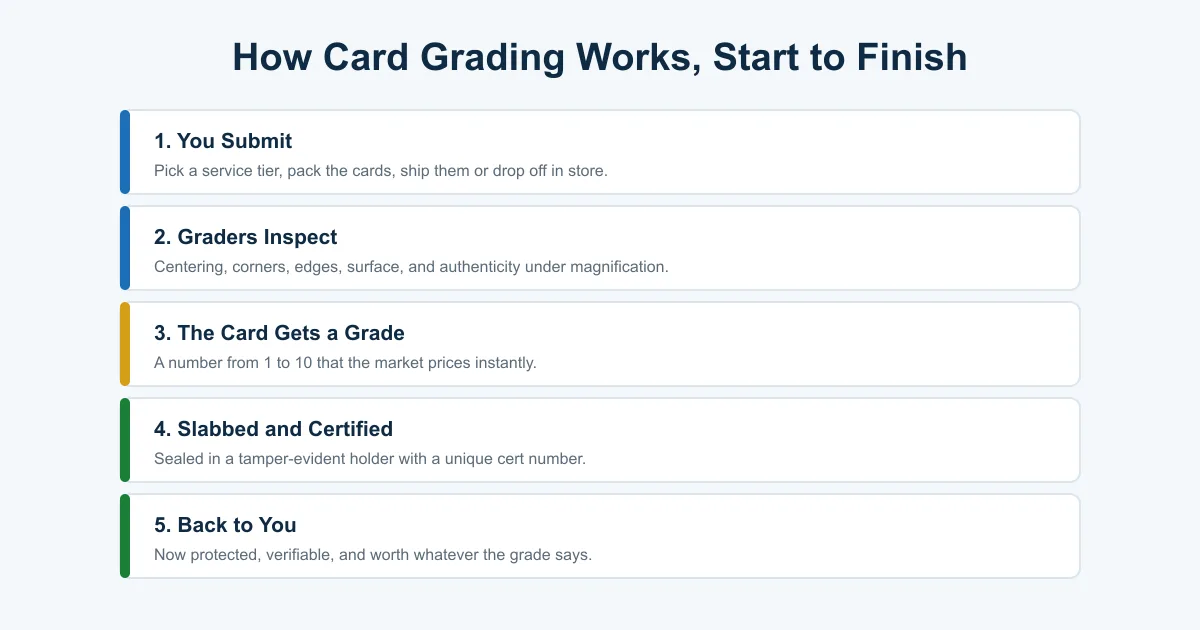
You choose a service tier (price scales with speed and the card’s declared value), submit the cards, and wait. Graders inspect centering, corners, edges, and surface under magnification, assign the grade, seal the slab, and ship everything back. The full submission walkthrough covers every step with the packing details that matter, and the turnaround guide sets honest expectations for the wait.
The Grade Scale in Plain English
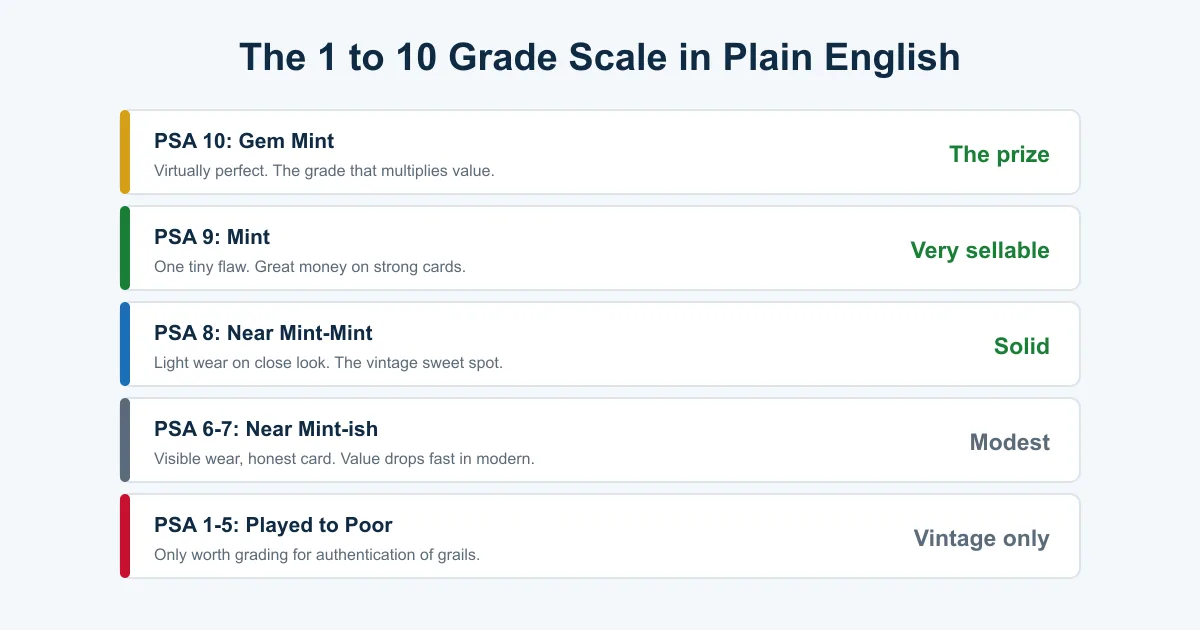
The scale runs 1 to 10, but the market only cares about the top:
- 10 (Gem Mint): virtually perfect, and where the big premiums live.
- 9 (Mint): one tiny flaw. Strong money on strong cards.
- 8 (NM-MT): the vintage sweet spot, where old cards look great without gem prices.
- 7 and below: modern cards fall off a value cliff here; vintage holds up far better because everyone understands a 1971 card lived a life.
The brutal math: the difference between a 9 and a 10 is often 3-4x the price, and the difference between your honest assessment and your hopeful one is usually exactly that one grade.
PSA, BGS, and SGC: The Short Version
All three major graders are legitimate; what differs is what the market pays for their slabs. PSA commands the highest resale prices and has the deepest population data. Beckett (BGS) offers subgrades and the mythical Black Label 10. SGC grades fast, costs less, and its tuxedo slabs are beloved on vintage.
My one-line rule: grading to sell, PSA; grading a perfect modern card for glory, BGS; grading vintage on a budget, SGC. The full three-way comparison breaks down when each answer changes.
What Grading Costs
As of mid-2026, plan around these numbers: value-tier PSA submissions run roughly $20-25 per card, economy roughly double that, and express tiers climb into the hundreds for high-value cards. Then the costs nobody budgets: insured shipping both ways, possible membership fees for bulk rates, and declared-value upgrades if your card grades into a higher bracket.
Rates change often enough that the full cost breakdown stays current on tiers and hidden fees, and PSA’s official pricing page is the final word. If a store-counter option appeals more than boxes and labels, there’s also the GameStop route, with its own trade-offs.
Which Cards Deserve a Slab
The honest shortlist, refined by my own hits and misses:
- Star rookies in true gem shape. The classic profit grade, when the condition check genuinely supports it. Modern Young Guns rookies are the most common example.
- Vintage stars in any presentable grade. Authentication plus the vintage market’s tolerance for wear makes these the safest submissions. O-Pee-Chee especially, where high grades are scarce by nature.
- Serial-numbered hits and autographs. Scarcity is already proven; the slab adds trust and protection.
- Keeper grails. My best Kessel cards are slabbed and will never sell. Protection and pride are real reasons; just book them as costs, not investments.
And the anti-list: junk wax base cards, visible flaws, and anything where the fee exceeds the card. The 90s guide exists because that lesson keeps getting purchased retail.
Should You Grade It? Quick Quiz
Grade or Skip?
Four questions, one honest verdict.
For the full expected-value math with your card’s actual sold prices, the grading ROI calculator is the next stop.
The Mistakes That Waste Grading Fees
A decade of submissions distilled into the errors I see (and made) most:
- Grading hope instead of condition. The card you love grades the same as the card a stranger owns. Assess like a stranger.
- Ignoring the 10 comp. If the PSA 10 only sells for double raw, a 9 loses money. Check both comps, not just the dream.
- Skipping surface checks. Corners get all the attention; print lines and scratches kill more grades. Tilt every card under strong light.
- Submitting during hype. Grading a rookie during a playoff run means everyone else did too. Your slab returns to a cooler market months later.
- Paying express for cheap cards. Speed multiplies cost, not value. Slow tiers exist for exactly the cards most people submit.
Grade with math and honesty, and the slab machine works for you instead of on you. Get those two wrong, and it’s the most expensive way in the hobby to learn what “near mint” means.
Costs and turnaround figures are approximations as of July 2026 and change regularly. Confirm current rates with the grading companies directly. Not financial advice.
Frequently Asked Questions
What is card grading?
Grading is a professional service that authenticates a card, scores its condition on a 1 to 10 scale, and seals it in a tamper-evident holder with a unique cert number. The grade turns condition, which is subjective, into a number the market can price.
How much does it cost to grade a hockey card?
Roughly $20 to $25 per card at PSA's value tiers as of mid-2026, with faster tiers running $50 to several hundred dollars. Add shipping both ways, and check current pricing at psacard.com because rates change.
Is grading hockey cards worth it?
Only when the expected sale price of the graded card meaningfully beats the raw value plus all fees, or when you want authentication and protection for a card you are keeping. Run the math before every submission.
Which grading company is best for hockey cards?
PSA slabs usually resell highest, BGS offers subgrades and the prestigious Black Label 10, and SGC is fast, affordable, and respected on vintage. For pure resale value, PSA is the default answer.
What grade will my card get?
Graders score centering, corners, edges, and surface. Measure centering, check corners under magnification, and tilt the surface under light. If you find any flaw, assume one grade lower than your hope.